My face is changing! Bella admitted that because of the disease she hated mirrors
The American top model shared her revelations about an autoimmune disease from which she has been suffering for more than 10 years. Bella Hadid admitted that the disease has a negative impact on her appearance.

Bella has been recognized as the most beautiful woman in the world thanks to facial features that fit perfectly into the golden ratio formula. And today, the 26-year-old top model admitted that chronic illness distorts her beauty. Hadid has been battling Lyme disease since 2012.
The muse of Hollywood make-up artist Charlotte Tilbury said she underwent emergency root canal surgery a year ago. Due to Lyme disease, she developed a low-grade infection in an adjacent tooth, which will now have to be removed.

On the recommendation of doctors, Bella took strong antibiotics, which negatively affected the condition of her skin.
Hadid released a picture taken a few months ago. The model posed for the camera in close-up, and rashes were visible on her face. The star of catwalks and gloss admitted that recently she often began to look like this.
Bella complained that the toothache radiated throughout her body in the lymph nodes. The model also noted that she looks like in the photo every time she is faced with an exacerbation of a chronic disease.

“You might wonder why my face is changing. And that’s why. End of story. That’s why I hate looking in the mirror or taking pictures, especially lately. I am constantly sick at the sight of myself.
Year after year. If I dress up, then maybe I try for girls. But guys, it’s hard to do your job while you feel and look sick like here, ”Bella emphasized.
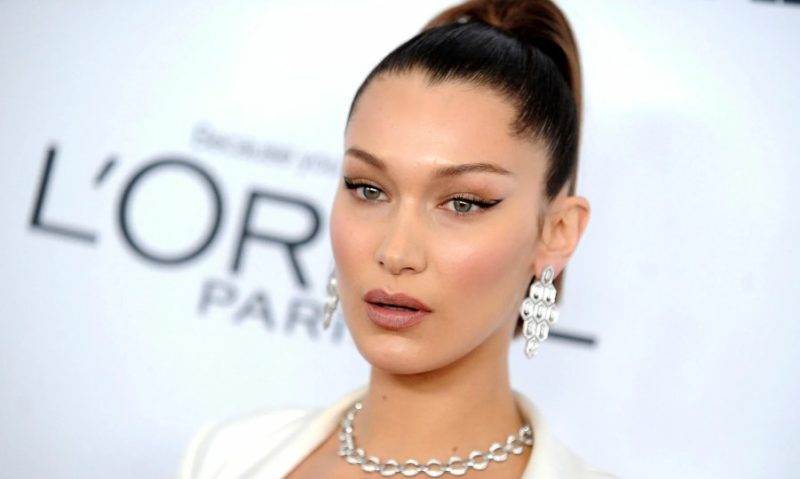
The former lover of rapper The Weeknd last month was recuperating next to her family and was engaged in horse riding. Bella admitted that she now feels better.
The younger sister of model Gigi Hadid has apologized for not being at her best during the past month on the set of gloss and advertising campaigns. Hadid noted that her professional pictures also look different during an exacerbation of the disease.